Young Literature House at Literaturhaus Berlin e.V.


Starting point
While renovation work was underway at the Literaturhaus Berlin, the Junge Literaturhaus developed a mobile program to reach children and young people outside the main location. As part of the Jugendkulturinitiative , an outreach program Jugendkulturinitiative launched in the Märkisches Viertel—a neighborhood that already offers a wide range of local activities.
The central partner was the library in the Märkisches Viertel, which played a decisive role as an established cultural anchor in the neighborhood. The goal of the collaboration was to jointly expand the existing offerings and to provide new impetus for XXX through the Junge Literaturhaus’s professional expertise and extensive network of artists.

Approach
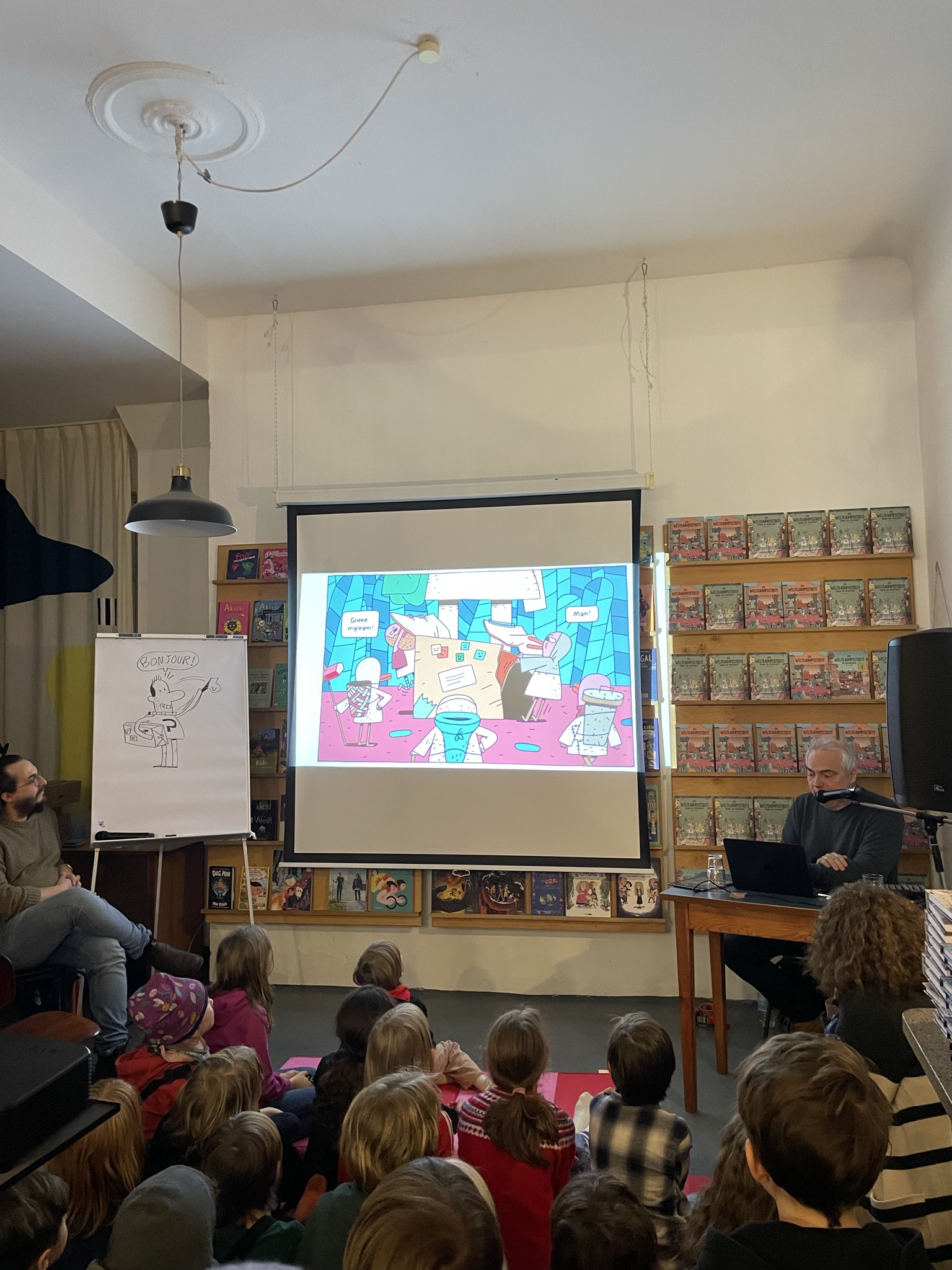
The literary genre of comics/manga was chosen as the thematic focus—a format that resonates strongly with young people while also providing an accessible introduction to language, storytelling, and reading.
The program included summer workshops, open weekly courses, and school partnerships. A particular highlight was the collaboration with the Mega Manga Convention at the Fontane-Haus: accompanying events organized by the Young Literature House, such as a manga drawing workshop, raised the profile of local cultural institutions—such as the library in the Märkisches Viertel—among a new audience and strengthened their presence in the neighborhood.

Transformation
The Young Literature House was able to build a robust network in the Märkisches Viertel and integrate it with its own network of artists. This gave rise to new, innovative formats for literary education that combined art, reading promotion, and pop culture.
At the same time, the institution deepened its own expertise in the field of comics/manga and in linking reading promotion with cultural education. Partners in the local community also benefited: through these programs, many young people were introduced to their neighborhood library for the first time—a lasting contribution to cultural participation and the visibility of local institutions.