Bauhaus Archive / Museum of Design

Protestant Congregation at Apfelsinenplatz
Wutzkyallee Youth Center
Wilde Hütte Girls' Sports Center
Fritzi Neighborhood Center
Gropiusstadt Neighborhood Coordination
Stadtvilla Global
Young Arts Gropiusstadt

Starting point
The Bauhaus Archive / Museum of Design is undergoing a comprehensive process of transformation. In parallel with the renovation work on the museum building, the institution is using its temporary closure to realign itself for the future—with the goal of making design visible as a socially relevant practice in the city’s everyday life. Future priorities will include building connections within Berlin’s urban community and, in particular, with the neighborhood surrounding Gropiusstadt. The areas of education, outreach, and public engagement are to be strengthened in particular.

Approach
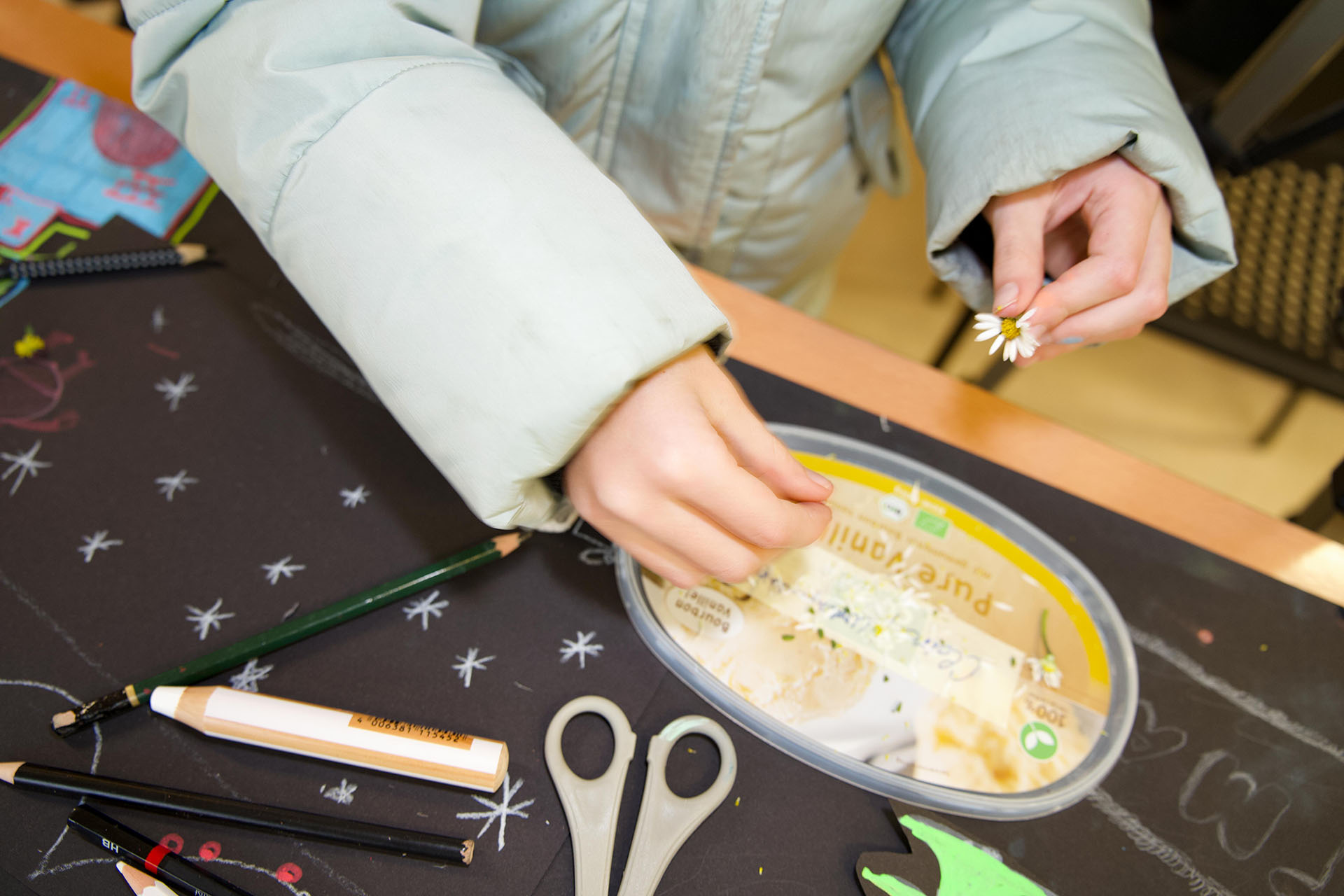
As part of the Jugendkulturinitiative , the Bauhaus Archive’s outreach team Jugendkulturinitiative a program consisting of ten subprojects. These served various purposes: There were regular, needs-based workshop formats in cooperation with local partners, which helped establish a long-term local presence for the Bauhaus Archive. Examples of this include art and design workshops that, modeled after the Bauhaus preparatory courses, offered spaces for creative experimentation.
In time-limited projects, key thematic questions were explored (e.g., What impact do the urban planning concepts from the 1960s have on residents’ lives today? Which places are important for young people in the neighborhood?). In doing so, the activities were also tailored to the wishes and needs of children and young people and planned and implemented in close cooperation with local stakeholders (including youth and social service providers, family centers, local artists, and schools). A defining practical example was the joint development of the “Bauwoche.” A participatory survey conducted by the neighborhood coordination team revealed the young people’s desire for a youth center in Gropiusstadt. The Bauhaus Archive supported this initiative and offered hands-on workshops where the young people could build their own furniture out of steel and concrete. One participant reported that the project was “like a training course” for him, as he was able to learn many new skills, such as bending steel.
An equally important part of the program consisted of inreach initiatives, which also brought the Bauhaus-Archiv as an institution into Gropiusstadt and strengthened internal appreciation and support for outreach work.

Transformation
Thanks to its ongoing presence and collaborative approach with existing initiatives in Gropiusstadt, the Bauhaus Archive is now viewed there as an active partner and cultural player. Local partners have expressed a desire to continue this collaboration and develop new joint projects. For local residents, this creates reliable points of contact and more opportunities to contribute their own perspectives and topics to cultural processes.
Socio-spatial work has also provided new impetus within the institution: Outreach work is increasingly recognized as an independent and relevant field of activity, and regular team meetings in Gropiusstadt have broadened the institution’s perspective on education, participation, and urban society. In this way, the program strengthens the conditions for establishing the museum in the long term as an accessible and collaboration-oriented institution in dialogue with diverse urban communities.

.jpg)
.jpg)


.jpg)

.jpg)

